
Transcript of the speech delivered by Lori Kerr during a presentation to the House of Commons Standing Committee on Foreign Affairs and International Development.

March 26, 2026
·
Development finance
Women's economic empowerment
Reducing the legal, social, and economic disparities between women and men is a fundamental human rights issue. It is also critical to reduce poverty and achieve a stable, prosperous future for all.

Reducing the legal, social, and economic disparities between women and men is a fundamental human rights issue. It is also critical to reduce poverty and achieve a stable, prosperous future for all.
The private sector plays a central role in advancing gender equality. In developing countries, it accounts for 90% of jobs, and SMEs (small and medium-sized enterprises) generate up to 66% of permanent, full‑time employment. Beyond jobs, private sector companies can expand women’s economic empowerment by improving their access to products, services, and tools.
Women’s economic empowerment and gender equality has been one of FinDev Canada’s core development impact priorities since our launch in 2018. That same year, G7 partners launched the 2X Challenge at the G7 Summit in Canada, creating a shared framework for development finance institutions to mobilize capital for investments benefiting women’s financial advancement. This gender lens approach strengthens our contribution to poverty reduction and enhances business performance across our portfolio.
In 2019, we formalized our commitment to applying a gender lens to 100% of our transactions through the release of our Gender Equality Strategy. This commitment sets out a comprehensive approach to enabling women’s entrepreneurship, leadership, quality employment, and access to products and services. Alongside the 2X Criteria, this strategy forms the foundation of our gender lens investing (GLI) approach.
In 2025, as the G7 Summit returned to Canada, we commissioned our first independent impact evaluation, conducted by the advisory firm Kore Global. We aimed to assess gender equality outcomes across our portfolio investments and reflect on seven years of GLI. This evaluation, along with the synthesis of the impact of the 2X Criteria, came at a timely moment to share learnings across the development finance ecosystem. It also contributes to a growing evidence base on the impact of GLI.
The evaluation reviewed 30 investments made between 2018 and 2023, representing 60% of our portfolio over that period. These investments spanned across financial intermediaries, agribusiness, and the renewable energy sector, and included 2X-aligned and non-2X-aligned investments.
The evaluation assessed how these investments economically empowered women. Here are some findings from the evaluation, and what it means for our GLI approach going forward:
2X‑aligned investments achieved the strongest outcomes for women, reaffirming that the 2X Criteria serve as a credible and effective framework for driving gender impact. Going forward, we will continue using the 2X Criteria to screen our transactions through a gender lens.
Several non-2X investments demonstrated significant progress in advancing gender equality. This observation displayed the value of engaging all clients on gender issues to unlock transformative change. We will continue using the 2X Criteria as a tool to identify opportunities for gender inclusion with all clients, reinforced with advisory and technical assistance support.
Four case studies - Locfund Next, Ecobank, CASEIF IV, and Climate Investor One Fund - illustrate how these five factors can lead to transformative gender impact. We will seek out these enablers to identify high-potential clients and to shape our advisory and non-financial support.
The evaluation confirms that incorporating a gender lens throughout the investment lifecycle yields a stronger, more lasting impact on women’s economic empowerment. It also highlights practical levers investors can use to further drive transformative change across portfolios.
As we move forward, we will integrate these insights into the update of our Gender Equality Strategy later this year, grounding it in our client-centric and flexible approach to supporting our portfolio companies. Ultimately, the findings signal that GLI is not only advancing gender equality, but also driving more inclusive development outcomes across our work.
Transcript of the speech delivered by Lori Kerr during a presentation to the House of Commons Standing Committee on Foreign Affairs and International Development.

28 January 2026
Transparency is fundamental to effective impact management and measurement in development finance, as sharing information on operations, decisions, and results builds trust, deepens understanding, and strengthens our ability to deliver collective impact. As Canada’s Development Finance Institution (DFI) and as a Crown corporation, we embrace our responsibility to operate in a transparent and accountable manner, and we actively seek avenues to strengthen transparency and improve reporting on our activities and their impacts. In the development finance industry, transparency fosters accountability, learning, and collaboration, while also reducing uncertainty which is crucial for encouraging investment in underserved markets.
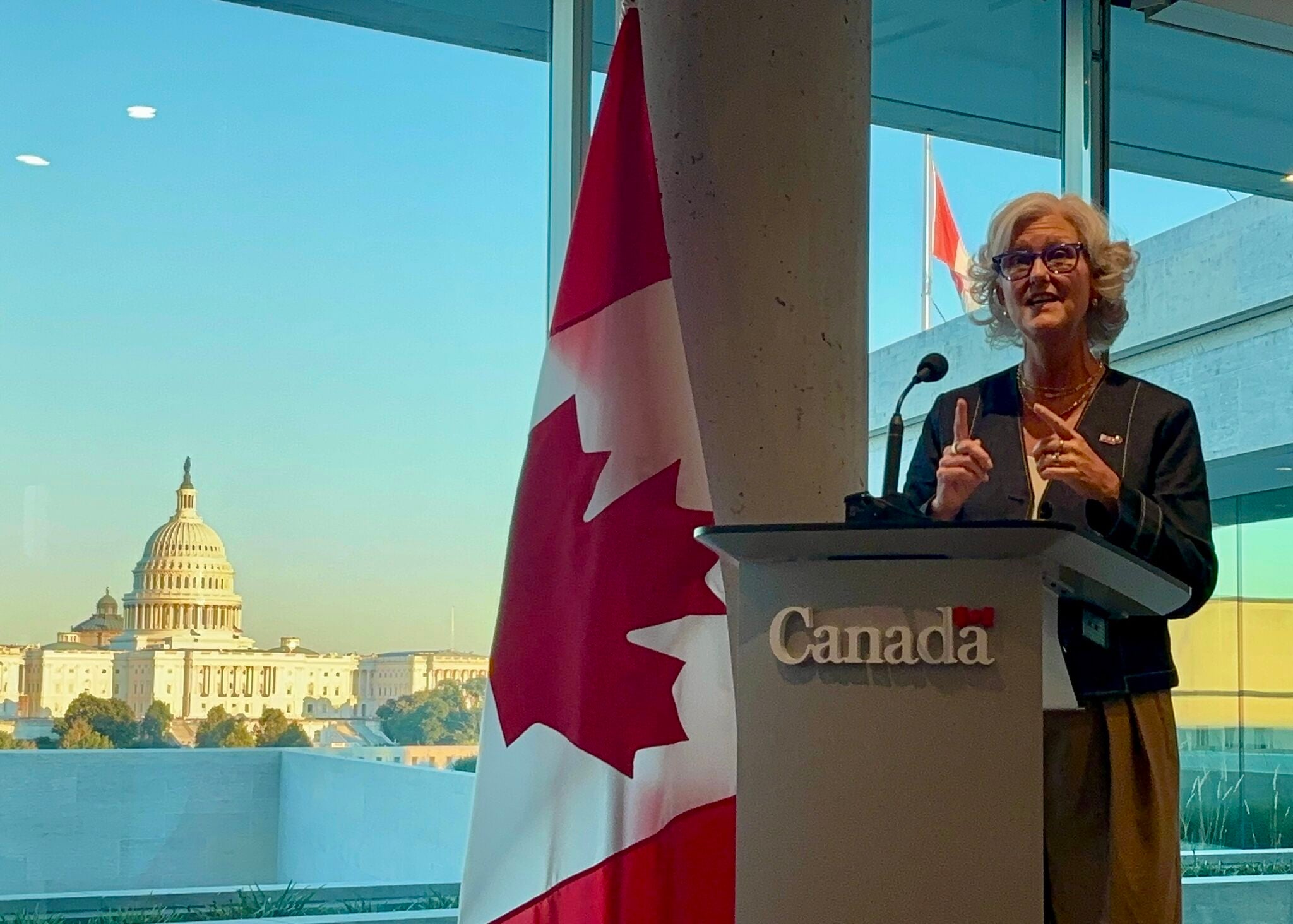
12 November 2025
Transcription of Lori Kerr's speech as part of the G7 Development Ministerial Meeting at the World Bank Annual Meetings.
Meet us at upcoming events!
View our case studies, watch our videos and listen to our podcasts.
Stay in the know with our latest announcements and releases.