Strengthening local agricultural value chains: ETG improves the continent’s agricultural structural transformation and market linkages. It sources commodities from smallholder farmers in Africa, provides access to productive agricultural inputs, grants entry to a diverse pool of global buyers, and ensures a reliable and fair remuneration for products at farm?gate.
Strengthening local economy value‑add: Through the provision of agricultural extension services, including gender‑oriented services, climate solutions, storage, and regional value chain integration, ETG enables smallholder farmers to optimize their agricultural productivity. This in turn improves food security by reducing overall post‑harvest loss and increasing smallholder incomes, while improving regional agriculture value?add.
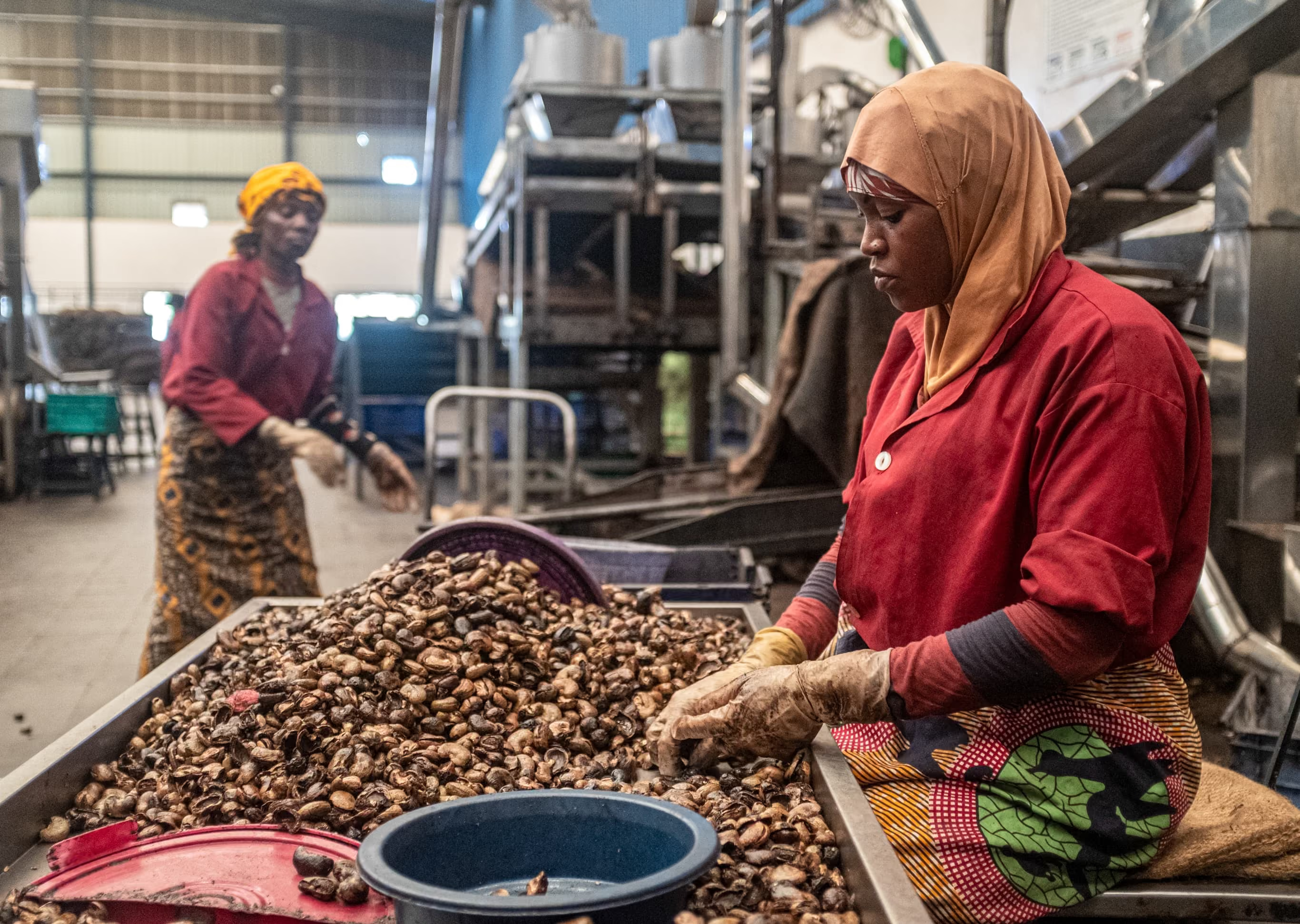
Supporting employment opportunities: Across its large African network of storage locations, logistics infrastructure and processing plants, ETG supports over 8,500 formal employment opportunities.
Advancing ETG’s corporate sustainability: ETG has set corporate objectives linked to the SLL. For example, it aims to enhance the delivery of gender‑oriented services to women farmers, increase its provision of training to smallholder farmers, and enhance efforts towards decarbonization. As a major agricultural player in the region, these improvements could promote sustainability in the agricultural market more broadly.